
memi
Updated 8d agoby memi-design



Memi
The design layer for agentic AI.
Memi gives coding agents the product context, interface checks, and verification loops they need to ship UI that fits the system already in your repository. Use the CLI and Memi Studio today; Memi Canvas is currently in development. Memi works with Codex, Claude Code, Cursor, MCP clients, and CI.
Start with your next interface · Get Memi Studio · Read the research
Quickstart
Run Memi in any frontend repository. The first result is a grounded brief for the next edit: what the product already does, where the relevant UI lives, and what needs verification.
npx -y @memi-design/cli@latest diagnose . --json --no-write --fail-on none
No account, API key, Figma file, global install, or daemon is required. The result carries normalized finding IDs, confidence, provenance, and file:line evidence.
Give the same context to your coding agent:
npx skills add memi-design/memi --skill audit-frontend-design
Then ask:
Audit this frontend before editing it. Prioritize the five changes that will matter most to users, reuse the existing system, and verify the result after the patch.
If Memi catches a real interface issue in your project, share the finding. Real reports are the most useful signal for what to improve next.
One product layer, three surfaces
| Surface | What it is | Status |
|---|---|---|
| Memi CLI | Interface intelligence and deterministic checks for local repositories, agents, and CI. | Available today |
| Memi Studio | A macOS workbench for bringing project context, agent workflows, and verification together. | Available today |
| Memi Canvas | A visual workspace for design-system context and controlled agent proposals. | Currently in development |
See the product
| Memi Studio | Memi Canvas — in development |
|---|---|
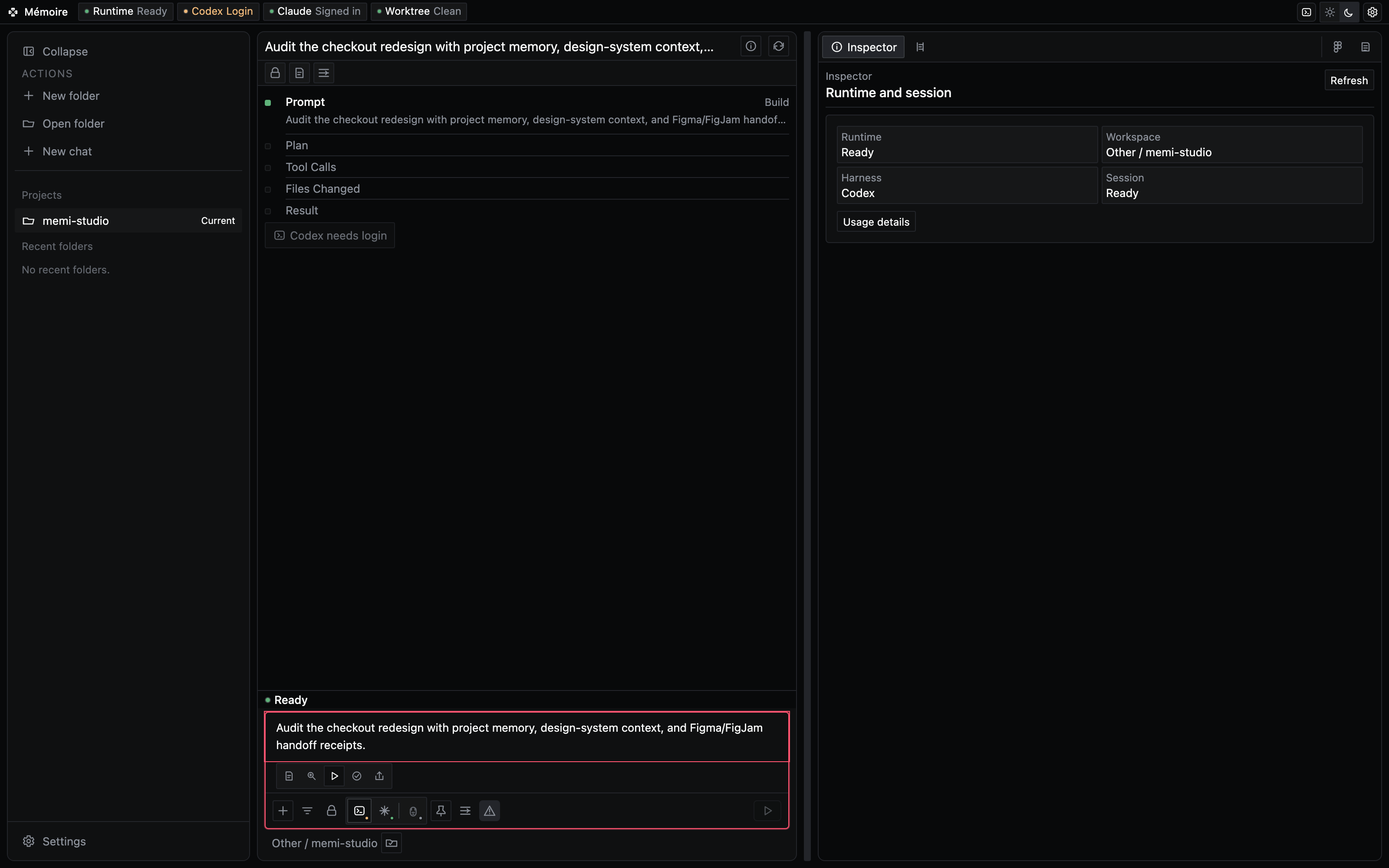 | 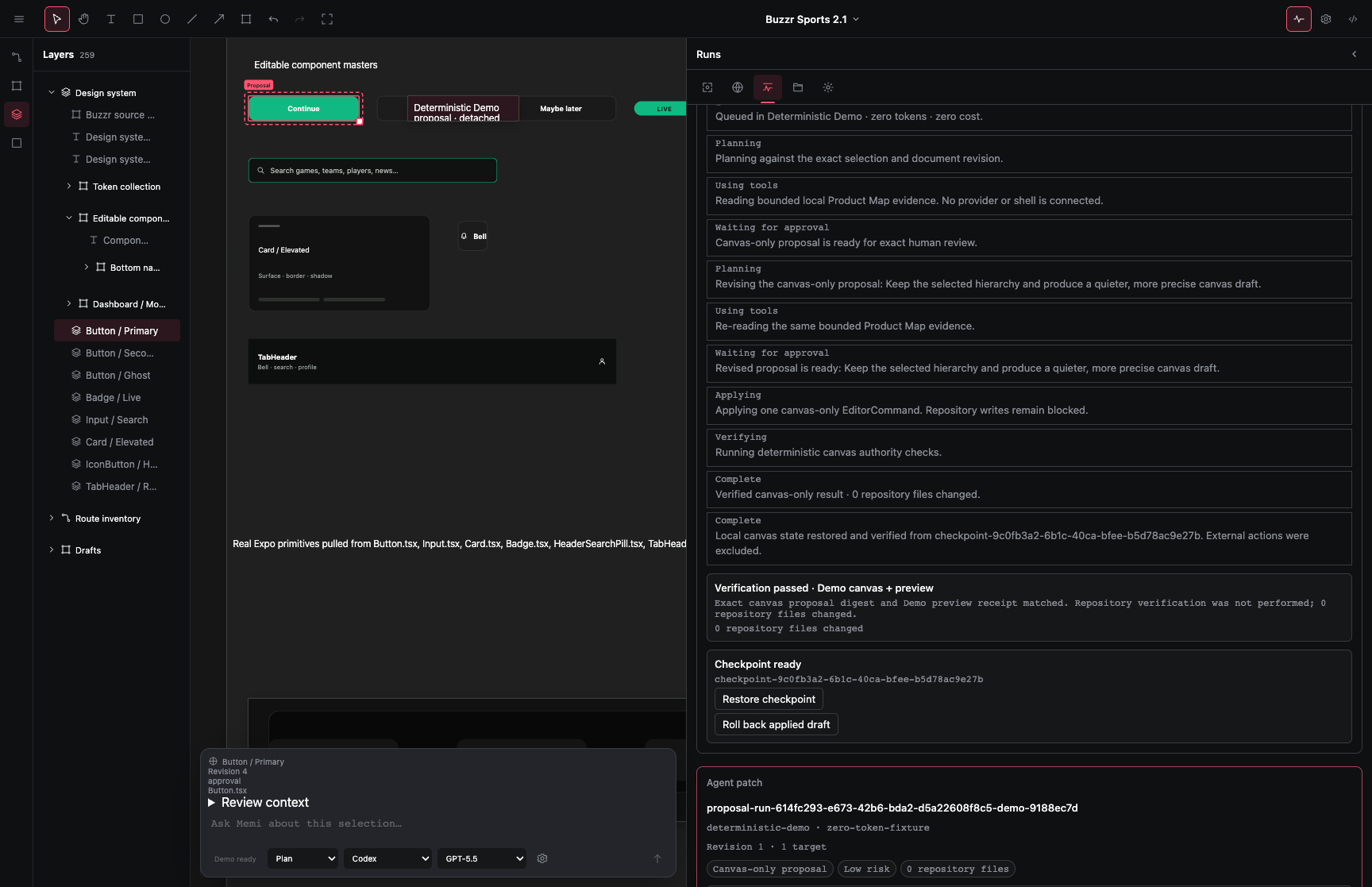 |
| Bring an agent prompt, project memory, and a verification surface into one workbench. | Preview design-system context, inspect a proposal, and keep a human in the loop. This preview shows an active development build, not a released product guarantee. |
Related servers

n8n
Updated todayby n8n-io
Fair-code workflow automation platform with native AI capabilities. Combine visual building with custom code, self-host or cloud, 400+ integrations.

mcp-server-fetch
OfficialUpdated 14d agoA Model Context Protocol server providing tools to fetch and convert web content for usage by LLMs
@modelcontextprotocol/server-everything
OfficialUpdated 14d agoMCP server that exercises all the features of the MCP protocol